
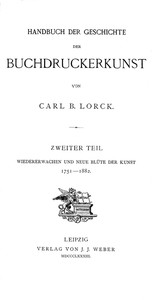
Handbuch der Geschichte der Buchdruckerkunst. Zweiter Teil by Carl Berendt Lorck
Let's be clear from the start: this isn't a novel. Carl Berendt Lorck's 'Handbuch der Geschichte der Buchdruckerkunst. Zweiter Teil' (Manual of the History of the Art of Printing. Part Two) is exactly what it says on the cover—a detailed guide. But calling it just a manual sells it short. Think of it as a massive, lovingly assembled scrapbook chronicling one of humanity's biggest leaps forward.
The Story
This volume is part of a larger work, and this 'second part' zooms in on the development of printing after its initial invention by Gutenberg. Lorck doesn't just list dates and names of printers (though there are plenty of those for the true enthusiasts). He follows the physical spread of the technology out from Mainz across the German states and into the rest of Europe. The 'plot' is the journey of the press itself. He shows how different cities became hubs, how printing styles evolved, and how the business of making books grew from a risky craft into an established industry. It's the story of a tool becoming a force of culture.
Why You Should Read It
I loved this book because it makes you see the familiar in a new light. Every time you pick up a paperback or scroll an article, you're benefiting from the revolution Lorck documents. His passion for the subject is obvious. He isn't a cold observer; he's a chronicler who understands that these printers, with their messy workshops and metal type, were the original social media disruptors. They broke monopolies on information. Reading about the challenges they faced—from censorship to technical hurdles—makes you appreciate the physical book in your hands as a triumph of centuries of problem-solving. It connects the dots between a 15th-century printer in Leipzig and the very idea of public knowledge.
Final Verdict
This is a specialist's book, but its appeal is broader. It's perfect for history buffs, bibliophiles (the people who truly love books as objects), and anyone curious about the origins of our information age. The writing is academic in its thoroughness, so it's not a breezy weekend read. But if you have a genuine interest in how our world of widespread literacy and ideas came to be, Lorck's work is a foundational text. It's for the reader who looks at a bookshelf and sees not just stories, but the physical evidence of a revolution.
You are viewing a work that belongs to the global public domain. Feel free to use it for personal or commercial purposes.
Mason Perez
1 year agoI had low expectations initially, however the depth of research presented here is truly commendable. Highly recommended.
Margaret Smith
3 months agoI had low expectations initially, however the narrative structure is incredibly compelling. Definitely a 5-star read.




Melissa Flores
10 months agoCitation worthy content.